
Home›Games›Watara Supervision›Pyramid
Pyramid
Watara Supervision, 1992
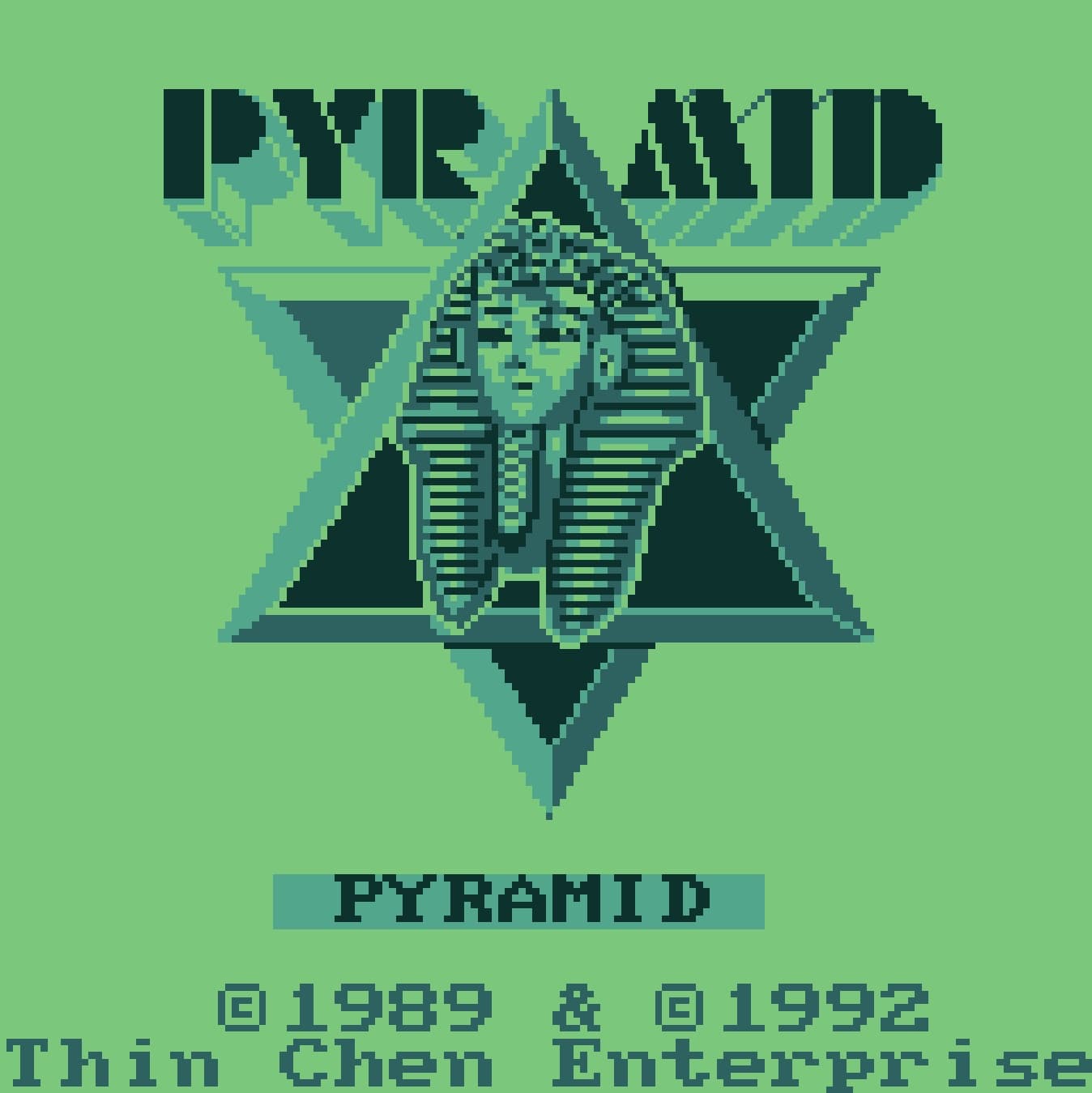
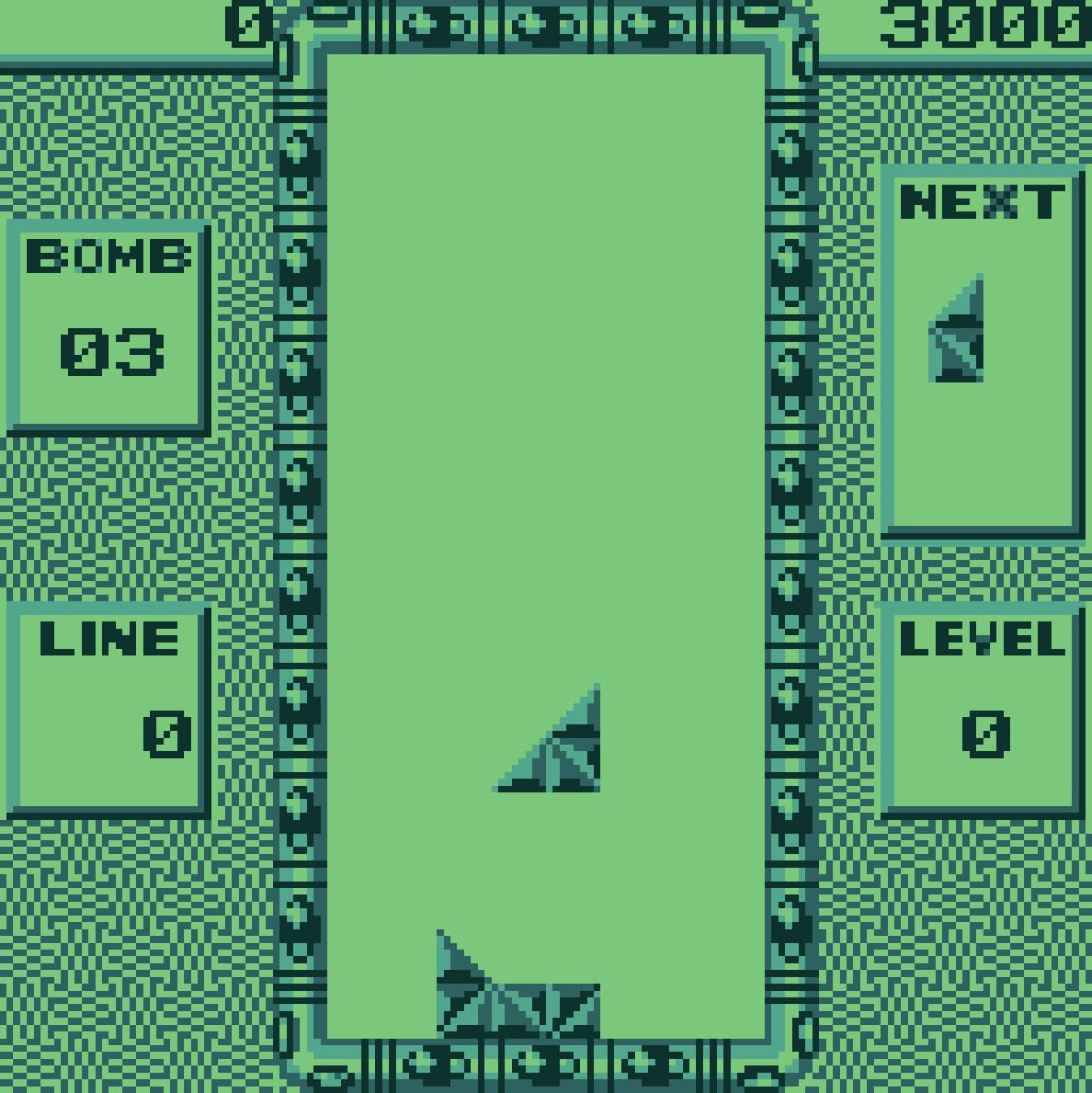
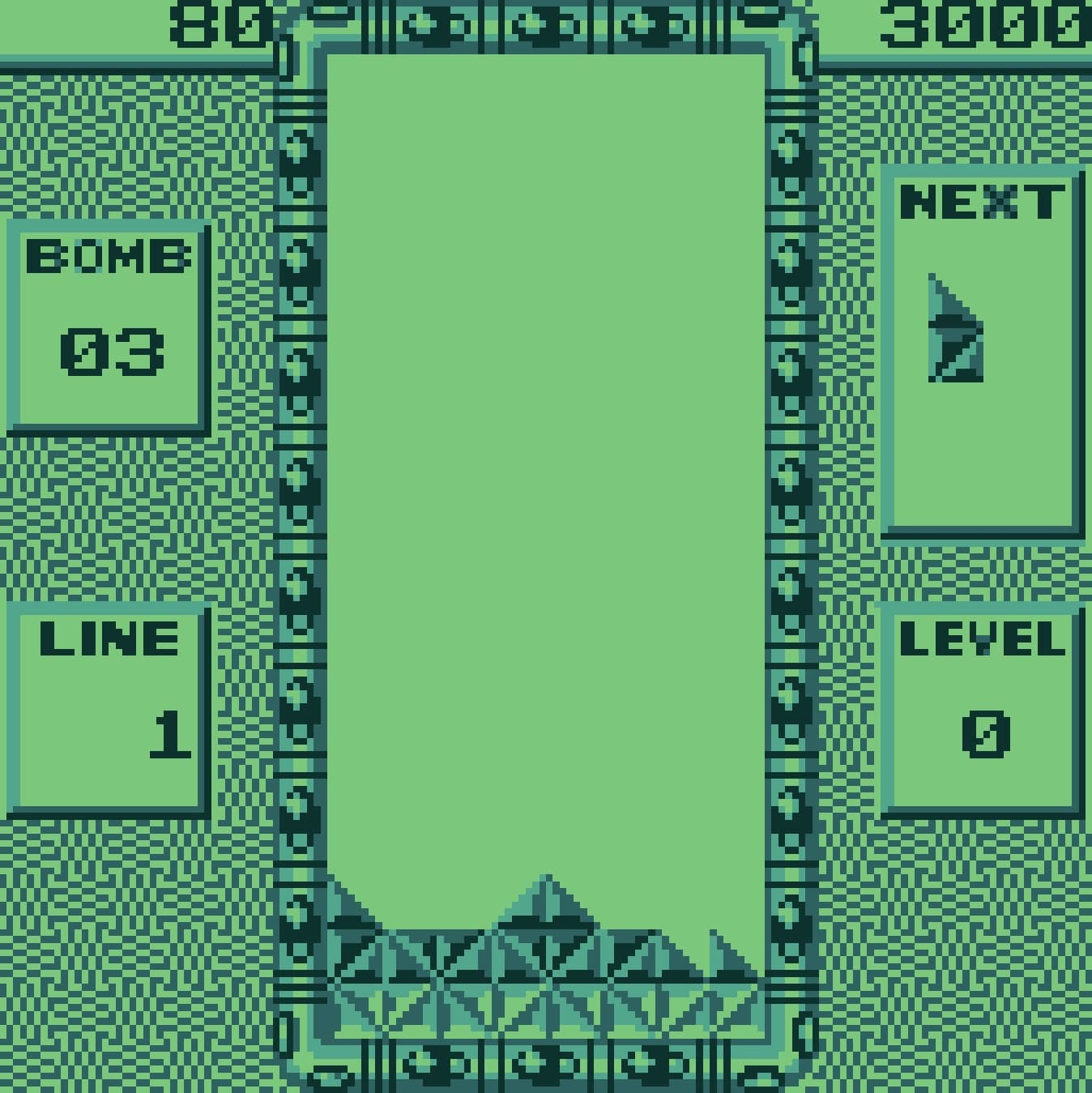
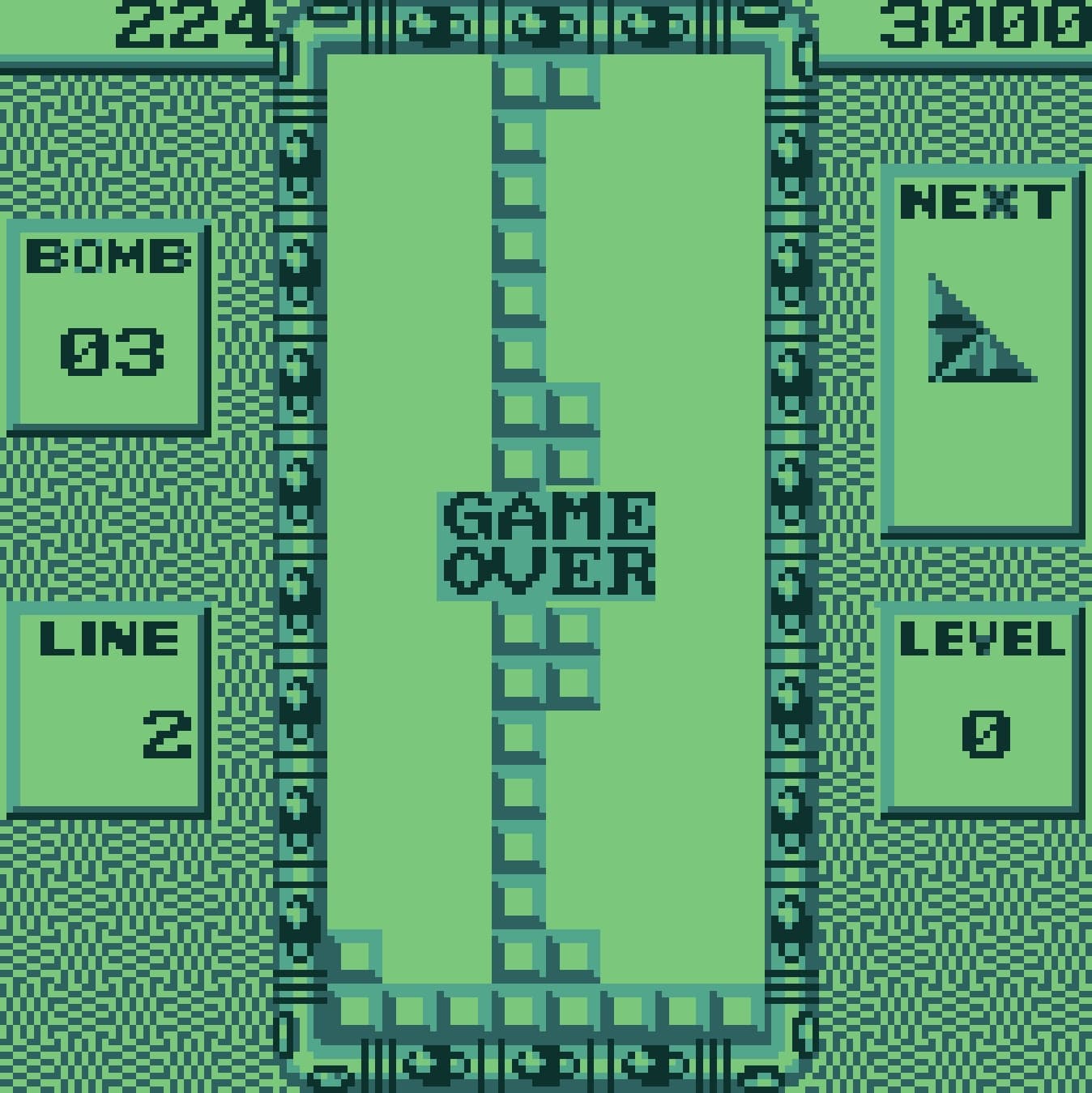
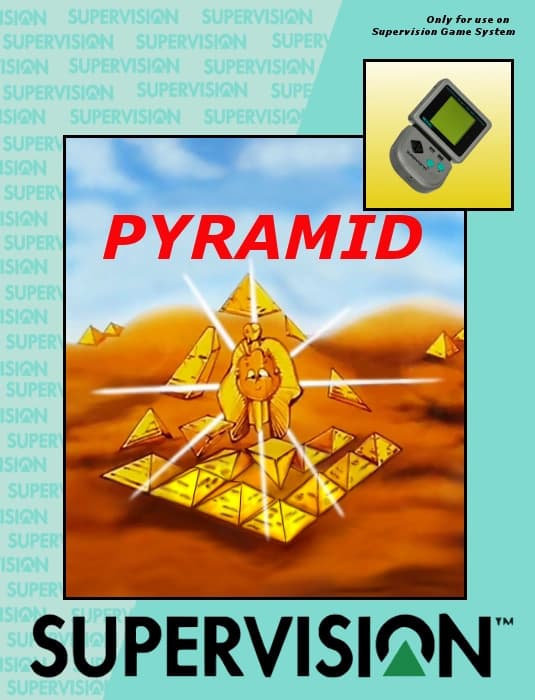
If you are braving the murky depths of the Watara Supervision's catalogue, you will quickly notice that nearly every title is a compromised knock-off of an established classic. Pyramid, released for the budget handheld around 1992, fits this description perfectly, though it actually attempts to add a rather bizarre twist to its source material. Originally developed by the notorious Taiwanese bootleg studio Sachen for the Famicom in 1990, the game was later squeezed onto the Supervision. At first glance, it is a blatant clone of Tetris, but rather than dropping standard square-based tetrominoes, it throws a barrage of triangular and half-square blocks your way. It is a strange, geometry-bending attempt to reinvent the falling-block puzzle genre for a cut-price audience.
The core gameplay loop will be immediately familiar, yet it is complicated by its own quirky mechanics. You must guide the descending shapes to the bottom of the well, rotating them to form solid horizontal lines. However, Pyramid heavily limits your clearing potential; you can only ever clear a maximum of two lines simultaneously. As a trade-off for this restriction, successfully completing rows rewards you with a bomb. These explosives can be dropped to clear out excess blocks and save yourself from a game over, but they come with a massive catch. They detonate in a rigid, cross-shaped pattern, which frequently blows awkward, jagged gaps into your carefully constructed stacks. It often feels as though the bombs do more harm than good, forcing you to constantly re-evaluate your strategy just to fix the mess you created.
Naturally, the true challenge of the game lies not in the falling triangles, but in the hardware itself. The Watara Supervision was infamous for its incredibly cheap, unlit four-shade greyscale display, which suffered from some of the worst screen ghosting of the 8-bit era. While a puzzle game theoretically fares better than a fast-paced action title, the slanted blocks in Pyramid require precise visual tracking to figure out exactly how they lock together. As the pieces drop, the hardware's severe motion blur smears them across the murky display, turning a simple test of spatial awareness into a headache-inducing chore. It becomes genuinely difficult to distinguish the orientation of the blocks before they hit the bottom.
The audio presentation does nothing to soothe the headache, heavily relying on the Supervision's trademark shrill, metallic sound chip. The endlessly looping chiptune soundtrack is harsh enough to ensure that most players will quickly turn the volume dial all the way down. Ultimately, Pyramid is a fascinating historical curio. It is a game that genuinely tried to put a fresh spin on the Tetris formula, but found itself severely hindered by baffling design choices and the unaccommodating nature of the absolute cheapest handheld console on the market.
Not currently available to purchase.
Achievements
No achievements are currently available.
Reviews
No reviews are currently available.
Store Items
No store items are currently available.